
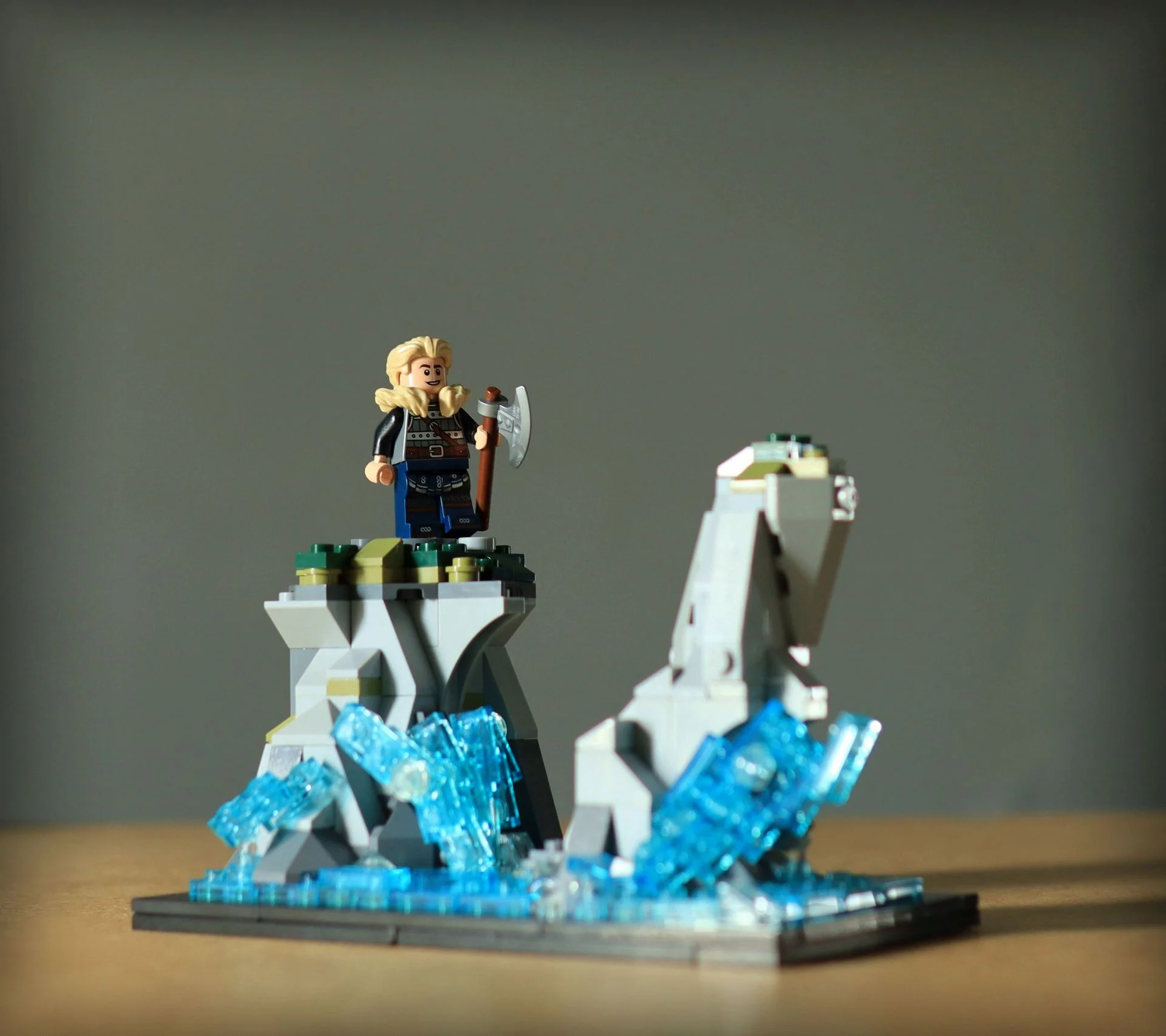
Most of my builds start with the landscape. Rocks, snow, water and trees set the mood before any minifigure appears. Here are the basics I use, with examples from my own builds.
1. Rocks and cliffs
Natural rock is never straight. Mix grays, stack pieces at different angles, and let layers overhang or step back. A rugged shoreline like in my rough shorelines build, where blue water crashes against rocky cliffs, only works when the rocks look irregular.
- Use several shades of gray instead of one.
- Tilt slopes in different directions.
- Avoid straight vertical walls.
2. Snow
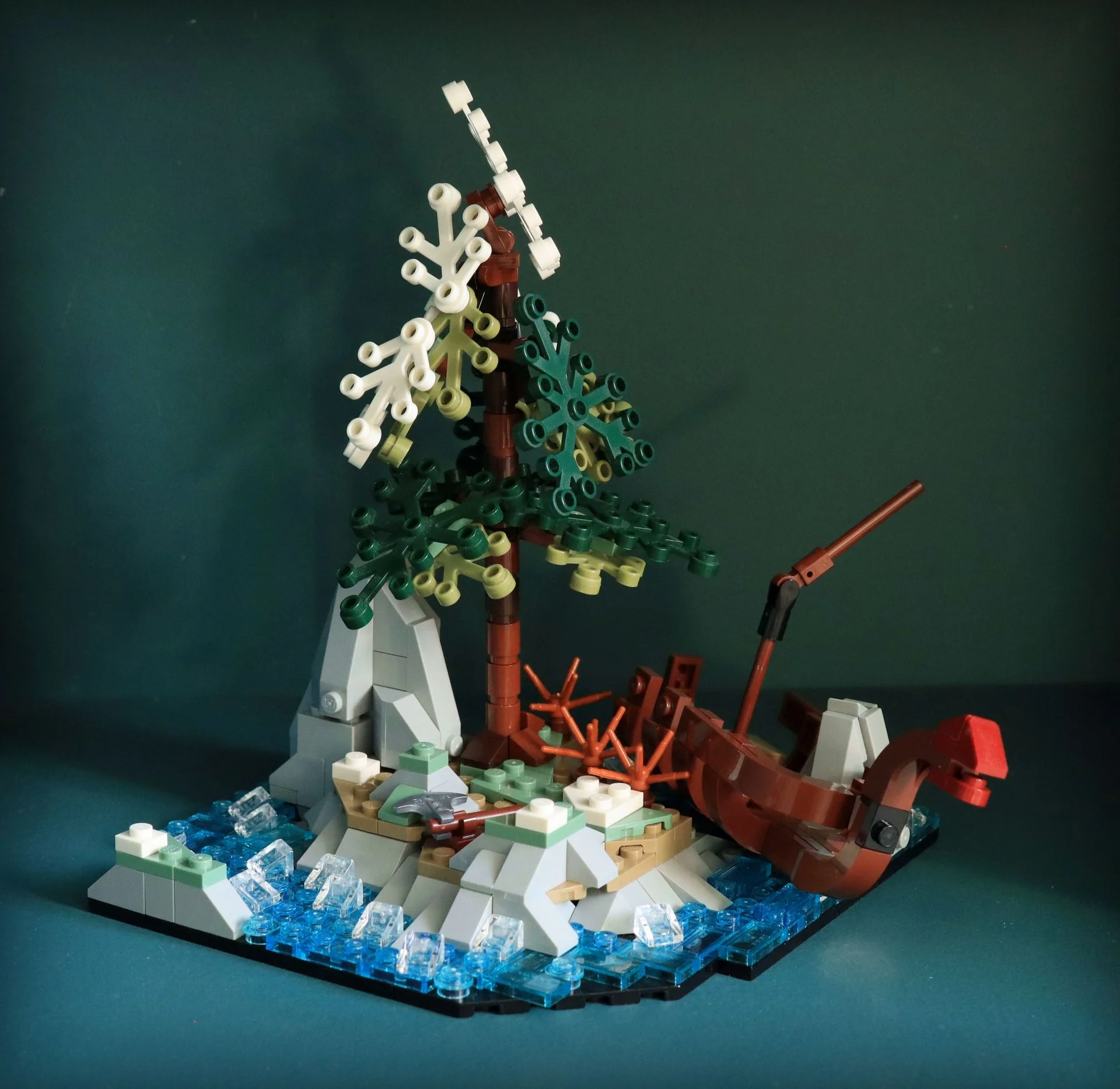
Snow is mostly about color placement. Put white on the top surfaces and fade to gray lower down. For my Snowy Mountain Climb I used simple white and gray slopes to get a chilly, windswept feel. A snowy Viking tomb and a pine tree dusted with snow follow the same idea.
3. Water
Water works best when it transitions from the land. In the Viking ship wreck, rocky terrain slopes into clear water, with waves lapping at the shore and the ship partly submerged. Let the water meet the rocks at an irregular edge, and use lighter colors near the shore to suggest shallow water.
4. Waterfalls
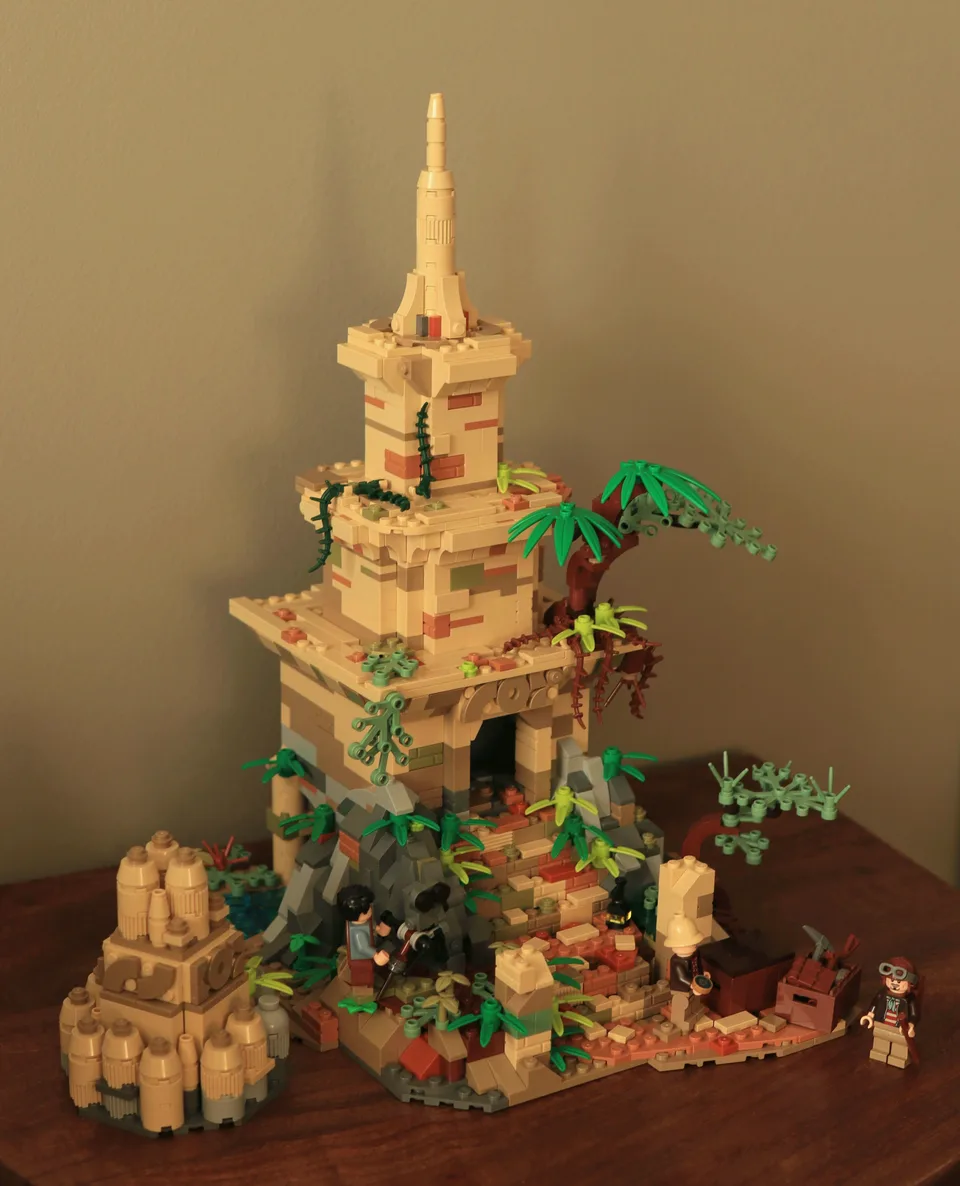
A waterfall adds movement to a mountainside. The Lost Mayan Temple has a brick-built waterfall cascading down the rocks. Build it from a narrow strip of blue and white that follows the shape of the cliff.
5. Trees and plants
Trees give scale and color. Use more than one tree shape, and vary the height:
- Pines for cold, rugged scenes.
- Leafy trees for forests and jungles.
- Autumn colors for warm scenes. My autumn forest uses fallen leaves on the ground, moss on the rocks and mushrooms among the foliage.
6. Ground details
The small things make a landscape believable: moss, leaves, mushrooms, stones and flowers on the ground. Scatter them unevenly, and use different colors.
7. Put it together
Pick one mood, such as cold and rugged, or warm and green, and keep your colors consistent. Then add one clear story element, like a lone Viking looking out over the sea.
Browse more landscapes in the Viking builds and Adventurers builds. To photograph your landscape, read my guide on close-up photos with a black background on a budget.
Comments
No comments yet.